Nursery Sleep Guide
Naturepedic Nursery Mattresses: What Parents Should Know About Materials and Fit
A crib mattress is a small object with a large job: it must fit the crib correctly, provide a firm and level sleep surface, and stand up to the ordinary spills and cleanups of early parenthood. When comparing Naturepedic nursery mattresses, start with those practical requirements—then examine materials, construction, care instructions, and the details that determine whether a particular model suits your crib.
Published November 7, 2026
Preparing a baby’s sleep space can feel like a shopping problem wrapped around a safety question. Product descriptions emphasize cotton, certifications, waterproof layers, and construction choices. But those details only matter after the fundamentals are in place: the mattress must be intended for the crib, fit it snugly, and be used according to the crib and mattress manufacturers’ instructions.
That distinction is useful when looking at Naturepedic nursery mattresses. A brand name or material label cannot substitute for checking the exact model, dimensions, fit, and care guidance. Nor does “natural” or “organic” automatically mean a product is safer for every baby or better suited to every family. The informed choice is the one that meets the sleep-space requirements and whose features, upkeep, and cost make sense for the household.
This guide explains how to evaluate crib mattress materials and construction, how to check fit, what to ask about covers and cleaning, and which details deserve a closer look before setting up a baby’s sleep space. It is general information, not a substitute for current product instructions or advice from a pediatric health professional.
Start with the sleep space, not the material label
Parents often begin with a preferred material—organic cotton, a particular type of foam, or a mattress marketed as breathable. A better first step is to identify the crib and its requirements. Check the crib manual for the mattress dimensions it accepts, any stated depth or support requirements, and instructions for the mattress support. Then compare those requirements with the exact mattress model’s current specifications.
Cribs are not all interchangeable, and “standard crib size” should not be treated as a guarantee that every mattress will fit every frame. Verify the mattress’s stated dimensions and make a physical fit check after placing it in the crib. The mattress should lie flat, with no obvious gaps around the edges. Follow the crib manufacturer’s directions for assessing fit; do not rely on a loose sheet, topper, or padding to make an ill-fitting mattress seem secure.
Fit matters because a mattress that shifts or leaves a gap can create a hazardous space. The goal is not simply to find something that appears close in size. It is to use a mattress specifically intended for the crib, installed as directed, with a snug fit around the perimeter. If the model, crib, or measurements are unclear, contact the manufacturer before use rather than guessing.
How to check nursery mattress fit
Fit is a practical question, not a marketing claim. Once the mattress is in the crib, inspect the edges and corners and confirm that it rests evenly on the support. A mattress should not bow, tilt, or leave a noticeable open space between its edge and the crib frame. Check the product and crib manuals for any model-specific instructions, since measurements and fit guidance can vary.
- Confirm the model: Match the product name and dimensions to the current manufacturer specifications, not just a retailer’s abbreviated listing.
- Measure carefully: If checking dimensions yourself, use a consistent method and compare like with like. A mattress’s listed size and the crib’s usable interior dimensions are the relevant figures.
- Test all sides: Check the fit at the head, foot, and both long sides. Look for gaps, movement, or uneven contact.
- Check the support: Make sure the mattress support is assembled and set at the position specified in the crib instructions.
- Recheck after changes: If the mattress is moved, the crib is adjusted, or a different mattress is introduced, check the fit again before use.
Do not add a second mattress, pillow, quilted topper, or improvised insert to change the fit or soften the surface. Extra layers can alter the sleep surface and may conflict with product directions. Use only items permitted by the crib and mattress instructions, and keep the sleep space arranged in accordance with current safe-sleep guidance from reputable public-health sources.
Understanding materials and construction
Naturepedic offers products associated with organic and other specified materials, but parents should examine each nursery mattress individually. A brand may sell multiple models with different cores, covers, waterproofing approaches, firmness profiles, weights, and care instructions. The details for one model should not be assumed to apply to another.
When reading a product description, separate the materials into their roles. The core is the main structural component. The cover forms the outer surface, while any waterproof or moisture-resistant layer is intended to help protect the mattress from wetness. Construction can affect feel, weight, handling, and cleaning, but descriptions alone do not establish that a product is right for a particular crib or baby.
Organic cotton may appeal to families who want to understand the origin or certification of textile materials. A certification can help clarify what a standard covers, but it should be checked by name and scope. It does not necessarily certify every component of a finished product or address every concern a parent might have. Read the certification information provided for the specific model and verify details with the certifier or manufacturer where needed.
Likewise, terms such as “natural,” “non-toxic,” and “chemical-free” require context. No physical product is literally free of chemicals; these phrases may refer to selected ingredients, treatments, or restricted substances. Look for specific material disclosures and verifiable standards rather than relying on broad language. If a product page leaves an important detail unclear—such as the type of waterproof layer or what is included—ask the manufacturer before purchasing.
Firmness, support, and the newborn sleep surface
A crib mattress is not chosen in the same way as an adult mattress. Plushness is not the objective. For infant sleep, public-health guidance emphasizes a firm, flat sleep surface designed for the baby’s sleep space, used without soft bedding or other loose items. Parents should consult current recommendations from organizations such as the American Academy of Pediatrics and follow the instructions supplied with the crib and mattress.
Do not infer infant suitability from a mattress being described as comfortable, supportive, or made from premium materials. Check that the precise product is intended for the crib or nursery use in question, and review its specifications and warnings. A mattress intended for an adult bed, toddler bed, or another purpose is not a substitute simply because it has appealing materials.
Parents should also avoid making softness changes with add-on pads or toppers unless the manufacturer explicitly identifies an accessory as compatible and safe for that exact use. In particular, do not use a product to compensate for a poor fit, a damaged mattress, or uncertainty about the sleep surface. When a medical condition or a specific health concern is involved, ask the child’s healthcare professional for individualized advice.
Waterproofing and everyday cleanup
Babies bring the ordinary messes of infancy to the mattress: leaks, spit-up, and occasional spills. A cover or surface layer designed to resist moisture may make cleanup simpler, but parents should learn exactly how that protection works. Some products have a built-in waterproof layer; others may require a separate, compatible protector. The product instructions should say what is included and what may be used with it.
“Waterproof” does not mean maintenance-free. Check whether the entire mattress or only its surface is protected, how to clean it, and whether a removable cover can be washed. The manufacturer’s care instructions take precedence over general advice. Cleaning a mattress with unapproved chemicals, soaking it, or using heat beyond the stated limits can damage materials or affect how the product performs.
For a removable cover, note the washing temperature, detergent guidance, drying method, and whether the cover must be fully dry before it goes back on. For a non-removable surface, look for instructions on spot cleaning and drying. Avoid improvising with solvents or disinfectants; these could leave residues or harm the cover. If a mattress becomes deeply wet, develops an odor, or shows signs of damage, ask the manufacturer how to assess it rather than assuming a surface wipe is enough.
A waterproof layer can also affect how a mattress feels and how it handles moisture. That is a product-specific question, not one that can be answered from the word “waterproof” alone. Review the construction details and consider whether the stated care routine is manageable for your household.
Certifications and ingredient transparency
Certifications can be useful when they are specific, current, and relevant to the question a parent is asking. A textile certification, for example, may address defined aspects of fiber processing or production; another standard may focus on emissions or restricted substances. These marks do not all mean the same thing, and a certification for one component should not automatically be read as certification of the whole mattress.
Before treating a logo or claim as decisive, find out what is certified, which organization issued the certification, and whether the precise mattress model is covered. Check the manufacturer’s current documentation and the certifier’s own published explanation. If the claim is important to your decision, ask for details in writing. This is especially worthwhile when product pages use general phrases but do not identify a standard or scope.
Transparency is valuable, but it is one consideration among several. The mattress still needs to fit the crib, be designed for its intended use, and have care directions you can follow. A carefully documented material profile cannot make an incorrectly sized product appropriate for a particular crib.
Questions to ask before choosing a Naturepedic nursery mattress
Product names and specifications can change. Before ordering, consult the current listing and manufacturer’s instructions for the exact model you are considering. A short set of questions can reveal whether the details are clear enough to make a confident decision.
- Is this exact model intended for the crib or nursery use I need?
- What are its precise dimensions, and do they match the crib’s stated requirements?
- What materials make up the core, cover, and any moisture-resistant layer?
- Which components, if any, are covered by a named certification?
- Is the cover removable, and what are the washing and drying instructions?
- Does the mattress require a separate protector, and which types are permitted?
- What are the product’s weight, handling instructions, warranty terms, and return conditions?
- Are there specific warnings, assembly steps, or instructions for checking fit?
Getting answers before purchase can prevent a common mismatch: a mattress that seems ideal on paper but is difficult to handle, incompatible with the crib, or more complicated to clean than expected. Keep the instructions and receipt after purchase, and check the mattress periodically for damage or changes in fit.
A note on other Naturepedic mattresses
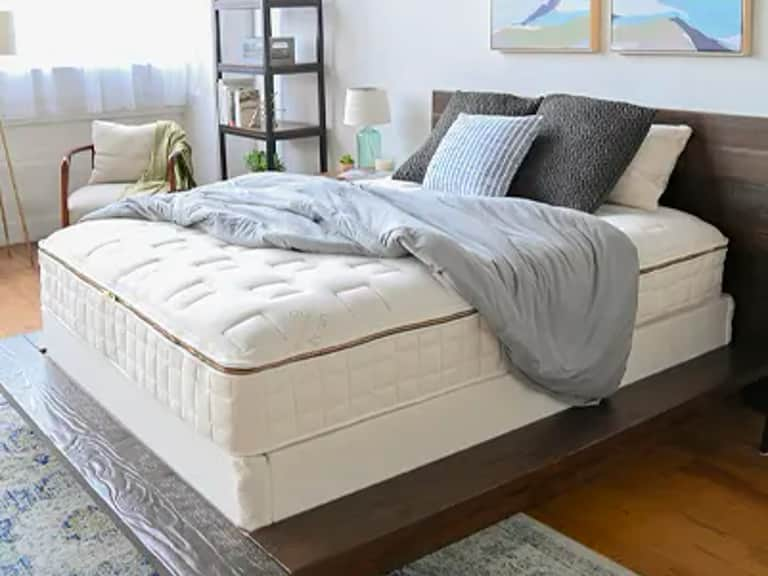
Some Naturepedic mattresses are designed for adults rather than cribs. For example, the Naturepedic EOS Classic Mattress is described as a customizable, multi-layer adult mattress with a substantial height and a construction that may require light assembly. Its materials and design are not evidence that it is suitable for a nursery or infant sleep space. Parents shopping for a crib should look specifically for a product designated for that purpose and verify its dimensions and instructions.
This distinction matters because brand familiarity can blur product categories. A company may make mattresses for adults, children, and babies, each with different sizes and intended uses. Always make the decision at the model level—not the brand level.
A practical checklist for setting up the crib
Once the mattress is selected, a deliberate setup is more useful than a last-minute assortment of accessories. Read the crib and mattress instructions, assemble the support as directed, and place the mattress flat in the crib. Confirm the fit at every edge and make sure the surface is in good condition. Use only the bedding and accessories permitted by current safe-sleep guidance and the manufacturer’s instructions.
- Use a mattress made for the specific type of crib and check its stated dimensions.
- Confirm the mattress lies flat and fits snugly within the crib.
- Use the fitted sheet recommended or permitted for the mattress, sized to fit securely.
- Keep the sleep surface free of pillows, quilts, loose blankets, and unapproved padding.
- Follow the mattress’s care instructions and allow any cleaned surface or cover to dry fully.
- Recheck fit and condition after moving the crib, changing components, or cleaning the mattress.
Safe-sleep guidance can be updated, so parents should consult current recommendations from trusted public-health and pediatric organizations. If instructions from a retailer, an older product page, or a third-party review conflict with the product manual or current health guidance, seek clarification from the manufacturer or a qualified health professional.
The bottom line
Choosing among Naturepedic nursery mattresses is less about finding a perfect-sounding material and more about confirming the essentials. Identify the exact model, establish that it is intended for the crib, verify the dimensions and snug fit, and understand how its materials and cover are maintained. Certifications and ingredient disclosures can add useful context, but they do not replace proper fit, product instructions, or a safe sleep setup.
For parents comparing options, the best questions are concrete: Does it fit this crib? Is it designed for this use? What is it made of? How do I clean it? Which claims apply to the whole product, and which apply only to a component? Clear answers make the choice less overwhelming—and help turn a crowded nursery checklist into a practical decision grounded in the details that matter.